Alonzo Drake was born in Parkgate, near Rotherham, on 16 April 1884.
From an early age, he displayed a remarkable enthusiasm for sport. By the time he was 14, he was already playing football for the local Parkgate Albion F.C., while cricket occupied his attention during the summer months with Alexandra Park.
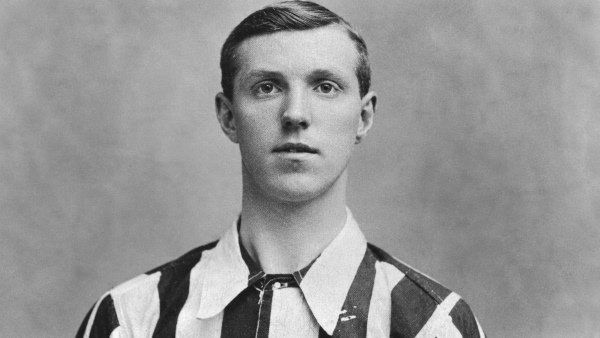
His considerable ability in both sports soon attracted the attention of local scouts. He quickly established himself as a promising footballer and joined Rotherham Town. After making one or two appearances for Doncaster Rovers, he moved to Sheffield United, where he began the 1903/04 football season and made his first appearance for the club.
Alonzo Drake remained associated with United until 1907, when he transferred to Birmingham City. He made 11 appearances before signing for Huddersfield Town at the beginning of the 1909/10 season, helping them secure promotion to the League. Sheffield, however, was where he made his greatest impression. During his time there, he played 95 matches and earned a reputation as a dependable performer who could always be relied upon to deliver a consistent display. Throughout the summer months, he also turned out for the cricket club, steadily developing his skills as a cricketer.
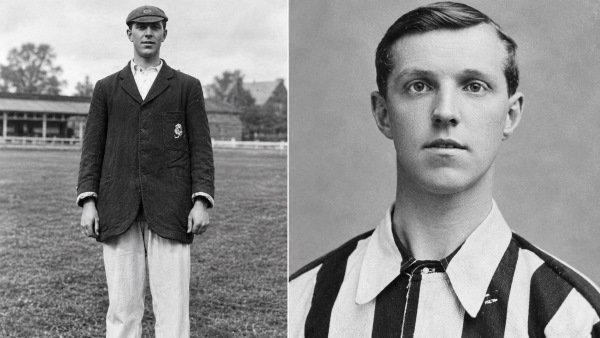
In 1907, at the age of 23, Alonzo Drake married and moved to Henley, near Huddersfield, where he soon established a home. His first full season with Henley proved particularly successful. He scored 644 runs at an impressive average of 58.54, including three centuries, and claimed 115 wickets against Holmfirth. He followed this with another 101 wickets against Kirkheaton. These outstanding performances, together with his encouraging batting displays in the early part of 1908, brought him to the attention of Yorkshire County Cricket Club.
Alonzo Drake made his debut for the Yorkshire Second XI, appropriately at Rotherham, on 6–7 July 1908. It was not an especially promising introduction, and a succession of similarly disappointing performances followed throughout the remainder of the season, raising concerns about his future prospects. Nevertheless, Yorkshire recognised his potential and decided to retain him. At the beginning of the 1909 season, he was allocated to Harrogate C.C. under the club’s young players’ scheme.
Once again, his early appearances offered little encouragement. However, after a difficult start, he gradually discovered his form. His performances at Bingley improved considerably, although the home side were dismissed for 38, with Drake claiming five wickets. His subsequent displays against Scarborough and Skipton caught the attention of the Yorkshire Second XI at Nottingham, and from that point onwards, his career began to gather momentum.
Eight wicket-taking performances for Durham and Staffs earned him considerable praise from several quarters. On 12 August 1909, he was called into the Yorkshire first XI after the established bowlers had struggled and the team needed to rest George Hirst. Yorkshire were playing Derbyshire at Sheffield, and Drake was selected to strengthen the bowling attack.
Alonzo Drake seized the opportunity with both hands. His first appearance at this level produced an impressive return of 54 wickets? No — his figures were 4 wickets, while his overall first-innings contribution for the Second XI had totalled 293, including 54 not out against Drake, Derbyshire’s opponents. In the match itself, he claimed four wickets. His encouraging debut was followed by another excellent performance in the second innings, helping Yorkshire secure a five-wicket victory. His figures of six wickets for 34 runs against Middlesex further enhanced his reputation. By the close of the season, he was being described as “a young player with a bright future”.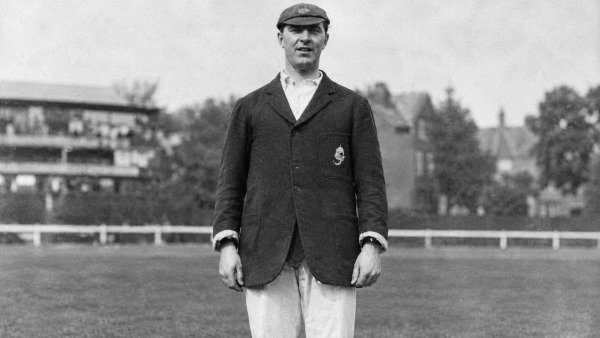
The 1910 season therefore began with high expectations for Drake. Nevertheless, as many players discover during their second season, cricket can be an unpredictable game. It was not until 1911 that he firmly established himself in the Yorkshire XI. That year, he scored 1,500 runs and captured 84 wickets, producing an outstanding all-round performance. He also registered his only two championship centuries in 1911: 147 against Chesterfield and 115 against Sussex. On another occasion, he narrowly missed a third hundred, falling just one run short when he was clean bowled by Field against Warwickshire.
The summer of 1912 proved disappointing for Alonzo Drake. His batting form deserted him, and he managed only three more wickets than he had taken in the previous season. Fortunately, these setbacks were soon left behind. One year later, he returned to his best, producing perhaps the finest all-round season of his career. He scored just over 1,000 runs and claimed 115 wickets at an average of 16.80.
Although he did not quite achieve the coveted double in 1914, his bowling reached another level of excellence. He finished the season with 158 wickets at an average of 15.30. During August, Alonzo Drake produced two remarkable bowling performances alongside Major Booth, first against Gloucestershire at Bristol and then at Weston-Super-Mare, where Drake delivered a particularly devastating display.
After Yorkshire had been dismissed for 162, Somerset were skittled out for just 44. Booth claimed five wickets for 27 runs, while Drake took five for 16. Yorkshire then scored 112 in their second innings, seemingly putting the match beyond Somerset’s reach. As expected, Somerset struggled once again and were dismissed for only 90. Drake completed a sensational ten-wicket haul, taking 10 wickets for 35 runs in just 8.5 overs, without conceding a maiden. It was a truly outstanding achievement and made him the first Yorkshire bowler to accomplish such a feat.
With the outbreak of the Great War, Alonzo Drake returned to his home in Honley, where he spent the 1915 season playing throughout the year. In November of that year, his wife gave birth to their first child, a son. Sadly, the baby died at birth and was named Ernest. By this time, however, it was Alonzo’s own health that had become a serious concern. He had already been rejected by the Army in 1914, when military medical authorities considered him unfit for service because of his poor health.
When the war ended in 1918, Drake was working as a woollen operative at a local mill. Unfortunately, his condition had deteriorated considerably, although he continued to turn up for work. His death came as a great shock to the cricketing community. On the morning of Friday, 14 February 1919, Alonzo died following a heart attack, although cancer of the throat had already been diagnosed.
During his brief but distinguished cricketing career, Alonzo Drake claimed 480 wickets at an average of 18 runs and scored just over 4,800 runs. His passing was a tremendous loss to Yorkshire cricket. He was one of the finest cricketers the county had lost, and Major Booth was among those who recognised his exceptional ability on the field during the 1916 season. Shortly afterwards, this talented left-handed all-rounder from Honley was gone, aged just 34.
Read More: Barry Richards – Down Memory Lane
M. Pope