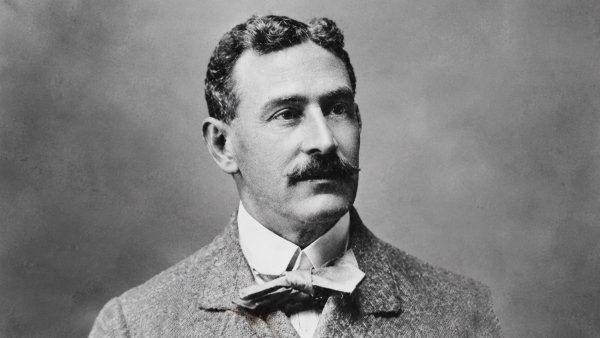
Like many club cricketers of his generation, including the First Lord Ebbisham, R. M. (Dick) Bell, Stanley Colman, Neville Miller and W. T. Graburn, William Williams, universally known as “Billy,” enjoyed an exceptionally long playing career. His cricketing life stretched across five reigns, from Queen Victoria to King George VI, and he took considerable pride in maintaining his physical fitness well into old age. Late in life, he was named as a co-respondent in a divorce suit and reportedly expressed considerable indignation when the case was dismissed.
Billy Williams was born on April 12, 1860, and played cricket from the 1870s until 1939, never missing a season.
According to reports, he regularly claimed at least a hundred wickets each season for fifty-five years, continuing well into his seventies. The list of clubs he represented reads like a directory of cricketing institutions across London and the surrounding counties. They included Acton, Chiswick Park, Queen’s Park (West Kilburn), Chiswick House, Harlequins, Boston Park, Gunnersbury Park, Exiles, Richmond, Oatlands Park, East Molesey, Hampton Wick, Twickenham, Teddington, Turnham Green, Surbiton, Romany, Thespids and the M.C.C.
He also represented Middlesex and toured the West Indies with Arthur Priestley’s team, led by the man who would later become Sir Arthur Priestley. Sadly, the passage of time has erased the details of many of the matches in which Billy appeared. The well-known statistician Ernest K. Gross has kindly supplied details of five of Williams’s notable performances.
Billy Williams was both famous and widely admired. Friends and fellow cricketers affectionately called him “the old buck,” “the old buffer” or simply “the old man.” His cheerful personality, neatly trimmed white moustache, and M.C.C. cap and sash remain memorable features of his appearance. E. W. Swanton recalled him as “a robust and upright fellow,” while Lieutenant-Colonel the Hon. E. G. French remembered his “kindly smile, unfailing cheerfulness and infectious sense of humour.”
When he left school, Billy was a genuinely fast bowler. On the sporting pitches of the period, he collected hundreds of wickets for Acton, Chiswick Park and Queen’s Park. During a tour with the latter in 1885, he took five wickets in five balls against Annunciation at Brighton. Finding fast bowling rather exhausting, however, he turned his attention to wicketkeeping. He proved so capable behind the stumps that A. J. Webbe invited him to represent Middlesex in 1885 after the Hon. Alfred Lyttelton had withdrawn from the side.
Billy kept wicket in nine of Middlesex’s ten county matches that season. He missed only the game at Bramall Lane, where Lyttelton arrived unexpectedly and resumed his place. Although Middlesex were a relatively weak side, Williams performed reliably as wicketkeeper. At Lord’s, he caught Dr. W. G. Grace off E. M. Hadow after the champion had scored 54. His other victims included E. J. Diver, L. Hall, T. Emmett, H. V. Page, W. R. Gilbert, G. G. Hearne, F. Marchant, the Rev. R. T. Thornton, W. Barnes, C. W. Wright, W. W. F. Pullen and J. H. Brain. It was an impressive collection of dismissals. Altogether, he took twelve catches and completed four stumpings.
There was, however, one unfortunate incident during Kent’s visit to Lord’s. M. C. Kemp, himself a wicketkeeper, was given out caught by Billy. As Wisden recorded, “it was very evident that the umpire’s decision did not satisfy him.” Billy enjoyed the remarkable experience of keeping wicket when Arthur Shrewsbury carried his bat for 224, then the highest individual score in a first-class match at Lord’s since 1820. He also witnessed Dr. W. G. Grace accomplish the same feat at Clifton with an innings of 221. Williams tended to underestimate his own batting ability, usually coming in at number 10 or 11 for Middlesex. Yet, in the match at Clifton, he scored a brisk 36-run partnership for the last wicket with J. Robertson. They narrowly failed to force Gloucestershire to bat again, and Middlesex eventually lost by an innings and five runs. Williams finished the 1885 county season with 82 runs at an average of 5.20.
The following season, he appeared only once, against Nottinghamshire at Lord’s. Standing in for the injured George Spillman, a promising young wicketkeeper-batsman whose knee had been hurt, Billy caught both M. Sherwin and Shrewsbury. Curiously, Spillman belonged to one of the London clubs of which Williams was also a member.
After that, little more was heard of Billy as a wicketkeeper. In 1886, while the Australian tourists were practising at Chiswick Park, he bowled to them. Having delivered several conventional fastish balls, he decided to experiment and released one from the back of his hand. The delivery turned sharply from leg, greatly surprising the batsman, who told him that if he could bowl that particular ball accurately, he would be capable of dismissing almost anyone.
Billy immediately devoted himself to leg-break bowling with extraordinary determination. From 1888 through 1895, inclusive, he claimed more than 1,000 wickets. His growing confidence as a bowler soon influenced his batting, too. In 1885, he had scored 460 runs at an average of 23 for Chiswick Park. In the years that followed, his run-scoring became considerably more prolific. He made 156 in a match for Chiswick Park, 124 for Boston Park against Belgrave in 1891, and 113 for Harlequins against Chiswick Park in 1894.
In 1892, he topped Boston Park’s batting averages, scoring 544 runs at an average of 32, while also taking the most wickets: 86 at an average of 8.91. Bowling, however, remained his principal strength. During at least five consecutive seasons with Richmond, he took more than a hundred wickets each year. His haul in 1898 amounted to 153 wickets at an average of 12.55.
The following year, against Streatham at Richmond, he captured 16 wickets as the visitors finished at 104 for nine in reply to Richmond’s 117. In another outstanding performance in 1899, he took nine wickets for 11 runs for Gunnersbury Park against Alleyn C.C. at Perivale. Playing for Chiswick House against the M.C.C., he claimed five wickets after scoring 88 and sharing a 170-run fourth-wicket partnership with H. Sich.
An extraordinary performance came in 1888, when he represented Queen’s Park against Christ Church Recreation at Brondesbury. Williams took 18 wickets in the match, nine in each innings, an astonishing achievement. Billy also became friends with A. E. Stoddart, England’s cricket captain, through rugby football. He was a fellow member of the Chiswick Park Club alongside Arthur Priestley. When Priestley took a team to the West Indies in 1896–97, on one of the earliest tours of the region, Williams was included alongside Stoddart, R. C. N. Palairet, S. M. J. Woods, H. T. Stanley, F. W. Bush and several other prominent cricketers.
The team’s results were not quite as successful as expected, with ten victories and five defeats. Nevertheless, the tour proved a triumph for Stoddart, who scored more than a thousand runs and took over a hundred wickets. Williams finished second in the bowling statistics, capturing 67 wickets at an average of 9.62. His figures included eight wickets for 20 runs against St. Vincent and 11 for 65 against All Jamaica.
In the representative match against Combined West Indies at Trinidad, he had Learie Constantine’s father caught by Stoddart and finished the first innings with four wickets for 53 runs. His best batting performance came against All Trinidad, when he scored 40 at number 10 before being bowled by S. Woods, a barefoot black fast bowler. At the time, leg-break bowling was being encouraged in county cricket almost as enthusiastically as fast bowling is today. It was an exciting period for the art, particularly with the prospect of a new and more helpful leg-before-wicket law. The proposed change, however, did not become law until the 1930s.
Billy Williams had no illusions about the limitations of his slow bowling. Plenty of runs were scored from it, but he once remarked, “I have never been fairly knocked to a standstill.” Batsmen frequently pulled him towards the leg side, yet they seldom managed to hit him out of the ground. He understood that on a reasonably true pitch, he could make the ball turn, whereas a perfectly prepared surface offered less assistance. He also recognised that if he could convince a batsman that the ball was going to turn, a delivery that appeared likely to break could be almost as effective as one that actually did so.
In 1899, he played four matches for Middlesex’s Second XI. He took seven wickets against Essex Seconds and scored an unbeaten 54 at number 11 against Hampshire Seconds. He also dismissed the celebrated big hitter Gilbert Jessop cheaply in a club match. In 1900, after an absence of fourteen years, Williams was recalled to the Middlesex side as a leg-break bowler. Their opponents were Gloucestershire, with Jessop among their leading players. One of Billy’s new teammates asked him, “Did you play with Fuller Pilch?”
Unfortunately, Billy was far less successful against Jessop on this occasion. His most vivid recollection of the match was hearing the great batsman’s strokes whizz past his ears “like a swarm of bees.” Bowling first change after J. T. Hearne and A. E. Trott, Williams finished with figures of 19 overs, two maidens, 94 runs and two wickets. Nevertheless, he enjoyed a run of fifteen appearances in the Championship during 1900. As Wisden observed, although he completed a considerable amount of work, he proved expensive. He was never overbowled, sending down 177 overs and four balls and taking 15 wickets at an average of 34.53.
His best performance came in Leicestershire’s second innings at Leicester, when he dismissed C. J. B. Wood, H. Whitehead and J. P. Whiteside for 37 runs. His other victims included A. Hearne, S. Coe, J. Vine, R. E. Foster, F. Wheldon, E. G. Hayes, E. Robson and J. Iremonger, all accomplished batsmen.
Usually batting towards the bottom of the order, Billy scored 37 at number 10 against Sussex at Hove. His highest innings was 39 at number nine against Kent at Tonbridge, where Colin Blythe eventually had him caught. Kent’s total was 120. Across 21 completed innings, Williams scored 230 runs at an average of 10.95.
He also played a part in a thrilling finish against Surrey at The Oval. When J. T. Hearne joined him as the last man, Middlesex needed 18 runs to win. W. H. Lockwood beat the bat but missed the wicket by the narrowest of margins. Billy then struck the winning runs with a lofted “mashie” shot that sailed just over the head of silly mid-on. Many men have been knighted for less!
Williams made one appearance for Middlesex in each of 1901 and 1902. In his final county match, against Kent at Lord’s, he had F. H. Huish caught by B. J. T. Bosanquet from the last ball he bowled before rain brought proceedings to a halt. He was elected to the M.C.C. in 1900 and, the following year, represented the club in two first-class matches. Against the South Africans at Lord’s, he dismissed their leading scorer, W. A. Shalders, leg before wicket.
For the next thirty-six years, Billy appeared in numerous M.C.C. matches across England, Wales, the Isle of Man and the Channel Islands. His good humour became increasingly familiar, particularly during encounters with school teams. Few men could have dismissed young, inexperienced batsmen with greater kindness and amusement than Billy Williams. On one occasion, he and R. M. Bell bowled unchanged and dismissed the City of London School for fewer than 12 runs. In 1927, Billy took a hat-trick against Christ’s Hospital, and in 1928 he claimed seven wickets against Haberdashers’ Aske’s, although his opponents still won. Performances of this kind were plentiful throughout his long career.
He represented the M.C.C. against most of the leading senior clubs, claiming hundreds of wickets and, in his earlier years, occasionally scoring heavily with the bat. In 1900, he scored 46 against Hampton Wick while taking the first five wickets. He made 76 not out in 1903 and 41 in 1911. In 1910, he struck 101 against Aldershot Command in a total of 206, followed by 78 against the Royal Fusiliers at Hounslow. He scored 50 against Upper Clacton in 1912 and 62 against Boston Park in 1914.
Often sharing the bowling with former Middlesex colleagues J. T. Hearne, A. E. Trott, J. T. Rawlin, B. J. T. Bosanquet and G. W. Beldam, he took six wickets against Edmonton in 1900, six against Moor Hall in 1903, nine against East Molesey in 1909, and five against London County Asylum in 1911.
That last match attracted considerable attention because the M.C.C. fielded an unusually strong side, including J. R. Mason, A. P. Day and J. W. H. T. Douglas, unsettling many of their opponents. The previous year, Billy’s fellow bowlers against London County Asylum had included Dr. W. G. Grace and H. V. Hordern, the Australian expert in the googly.
He seemed almost indestructible. As late as 1927, he played against North Wales at Llandudno and against Teddington, taking four wickets. In 1928, he scored 16 at number nine against Indian Gymkhana, although the young Bill Bowes did most of the bowling. In 1934, playing against Lords and Commons, he dismissed Lord Dalkeith, Lord Tennyson and Major Lloyd George for a combined total of 16 runs. The M.C.C. presented him with the ball in recognition of his achievement.
In 1936, he scored 12 at number 10 against Surbiton, although the young professionals F. W. Putner, B. L. Muncer and F. Covill took the wickets. Billy continued playing a wide variety of club and country-house cricket, although his bowling occasionally attracted criticism. During one village match, after taking wickets with considerable success, he overheard a prosperous-looking local man remark contemptuously to a friend:
“’E’s been bowling ’em all out, and he can’t bowl no faster than an old worm can crawl!”
Whatever the speed of his deliveries, Williams frequently produced remarkable bowling figures. In 1909, playing for Chiswick House against Brentham at Hanger Lane, he took all ten wickets for 26 runs. In several matches for the same club against the M.C.C., he claimed a large number of wickets, including those of George Robey, Davy Burnaby and Oscar Asche.
His appearances for Richmond became less frequent, but when Peace returned in 1919, Billy resumed his influential role as a bowler for East Molesey, Acton and other clubs. At Addlestone in 1922, he bowled unchanged alongside R. C. Joy for East Molesey, leaving the home side anxiously placed at 98 for nine at the close of play.
Williams took the most wickets for East Molesey in both 1922 and 1923, claiming 73 and 85 respectively. He was awarded the club’s bowling prize in each year. In 1923, he also took seven wickets for 62 runs against Springfield Mental Hospital. Throughout the late 1920s, he continued to trouble batsmen with his seemingly harmless slow deliveries.
He also enjoyed successful appearances for the Romany, taking seven wickets in 1931 and fifteen in 1932, both at modest cost. In 1936, he represented the Thespids alongside H. M. Garland-Wells, Oliver Gordon, Hugh Burden, Brian Egerton and Jack Livesey against Mrs. Hunt’s XI at Wimbledon. Their opponents included H. G. Owen-Smith, D. J. Knight and G. H. Taylor.
The players enjoyed having the old man in their company, whether as a teammate or an opponent. For many years, Billy remained active in an annual charity match at Twickenham. One of his final appearances came in 1938, when he was 78 and turned out for the Thespids against Chiswick Park at Chiswick. His remarkable journey had come almost full circle.
This fine old sportsman Billy Williams, whose extraordinary career is believed to have yielded around 8,000 wickets, died at his home in Hampton Wick on April 14, 1951, aged 90. Read More: Ephraim Lockwood – Yorkshire’s Batting Star of the 19th Century